WELCOME TO THE BRANCH
Our Unity, Missions and Vision - Who We Are
Messages for Growth - view all
Sacred Records for Download
Collected Across Ages (c. 600 B.C.–1370 A.D. and Beyond) — The sacred records represent a unified compilation of teachings, testimonies, prophecies, and histories preserved by diverse peoples across the Americas, the carriers of the khipu, and other keepers of memory. Though recorded in different forms—stone, metal, cord, bark, and oral tradition—they bear witness to a shared covenant centered on unity, humility, mercy, and alignment with creation. These records recount the origins of the world, the fall and scattering of humanity, the rise of prophets and peacemakers, and the continual preservation of truth through faithful witnesses amid conflict, migration, and spiritual trial. Together, they form a single testimony: that the Creator speaks across all lands, restoring light in every generation, and calling all peoples to remember, walk in balance, and return to the path of peace.
Records Maintained in the Lodge and not for public use outside the lodge:
-
THE RECORDS OF MAAMIN (who is also called today Mormon) (written by Maamin, Atsin, Serehon, and Arenai)
-
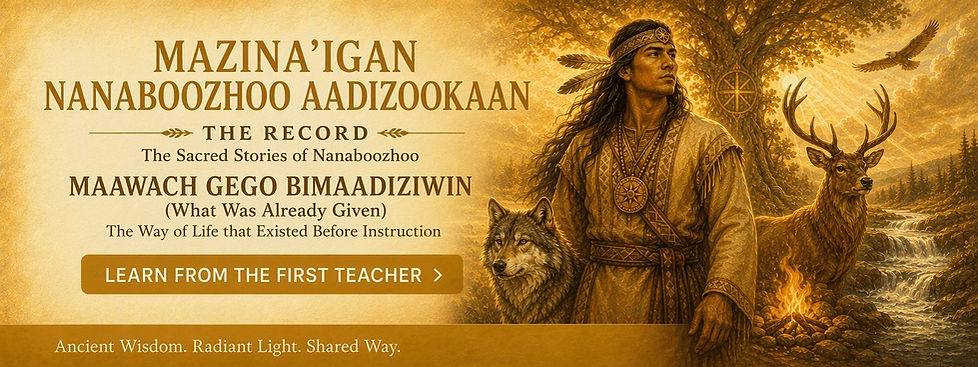
MAZINA'IGAN — NANABOOZHOO AADIZOOKAAN (The Sacred Stories of Nanaboozhoo)
-
OR HAYYAH (written by ḤANAN-GIIZHIG in the first century)
Read the Pamphlet Overview: YESHUA AMONG THE NATIVES OF THE AMERICAS
NOTICE: A mentally disturbed individual and relation of Chief Midegah, acting without the consent of the Lodge or its recognized keepers, has illegally filed sacred records with the Copyright Office in order to embarrass the Lodges publicly for not involving them. These materials are traditional Indigenous knowledge held collectively, not privately owned. Under U.S. copyright law (17 U.S.C. § 102), copyright protects only original works of authorship and does not extend to ancient, communal, or inherited knowledge, placing such material in the public domain. Further, under UNDRIP (Articles 11 and 31), such knowledge remains the collective inheritance of the people.
The filings have been formally disputed, and the Copyright Office has been notified to review and revoke them.
SENIOR RECORD I: Approx. 700 B.C. - MISKWAABIK OZHIBII’IWE: "The Copper Records" presents teachings traditionally understood as being inscribed on sacred copper plates, preserving early spiritual knowledge and history of the Anishinaabe people. Attributed to Midewiwin High Priest Gah‑Onabid, these writings recount Creation, the role of the Great Spirit, and the origins of humanity, emphasizing balance, responsibility, and the Midewiwin path of living well. Rooted in oral and ceremonial traditions, the Copper Records offer a profound narrative connecting the natural world, spiritual teachings, and the enduring identity of the people. This is the foundation of the Star Lodge, is from the original source record, the oldest record of the North.
SENIOR RECORD II: Approx. 500 B.C. - POP WUJ: "The Sacred Book" presents a foundational narrative of creation, spiritual law, and the origins of the K’iche’ Maya people. Preserved through oral tradition and later recorded in written form, it recounts the acts of the Creator, the shaping of the world, and the journey of divine figures such as Hunahpú and Xbalanqué, who restore balance through wisdom, sacrifice, and unity. The text describes the formation of humanity from maize, the rise of the first ancestors, and the establishment of tribes, kingdoms, and sacred lineages. Rooted in ceremonial knowledge and ancestral memory, the Pop Wuj emphasizes transformation, humility, discernment, and alignment with the Heart of Heaven, preserving the spiritual identity and enduring teachings of the K’iche’ Maya. This is from the original source record, the oldest record of the Maya of Central America.
Approx. 1567 - MIDEWAG: “The Lodge of the Faithful” presents a preserved record of the Midewiwin lodges as guardians of sacred teaching, memory, and discipline during a time of spreading deception under Two Rivers. Maintained through oral transmission and sacred writing, it recounts the defense at Wakpa Tanka, where the faithful resisted through remembrance rather than force, and the subsequent retreat into northern forests to safeguard copper plates, birch scrolls, and ceremonial knowledge. The narrative describes the role of elders and apprentices in preserving the covenant, the emergence of prophetic figures such as the Wabeno child and Midegah, Keeper of Truth, and the preparation for the fulfillment of the 8th Fire. Rooted in ancestral instruction and seasonal reckoning, the Midewag emphasizes vigilance, courage, and active remembrance as essential to resisting deception, preserving identity, and maintaining alignment with the enduring teachings of Yehowzhowa.
Approx. 1567 - MISHIIKENH: “The Big Turtle” presents a sacred narrative of the Peacemaker Yahaawzhowa as preserved through Anishinaabe and northern traditions, recounting his journey across Great Turtle Island and into the northern lands where prophecy, teaching, and lived wisdom converge. Maintained through oral tradition and recorded by elders and apprentices, it describes the fulfillment of prophecy through his arrival among the people, and the transmission of Aadizookaan teachings drawn from the land, animals, and elements. The narrative follows his guidance through lessons of the salmon, bear, and moose, emphasizing perseverance, patience, humility, and balance between strength and restraint. It reflects the preparation of communities through vigilance, discernment, and ethical action, while affirming the interconnectedness of all life within the Creator’s design. Rooted in experiential learning, ceremonial practice, and ancestral memory, Mishiikenh preserves teachings of courage, compassion, and awareness, ensuring the continuity of the Heart Path through those who observe, remember, and walk in alignment with the Light.
Approx. 1000 A.D. – Khipu Intipaq: The Quipu of the Sun records the testimony of Ñawpak, a humble Andean farmer who witnessed the descent of a Living Star and received the word of the Eternal Sun. Preserved through sacred khipu cords, it reveals a covenant centered on unity, humility, gratitude, and balance, calling a people into remembrance of the First Dawn. The narrative follows Ñawpak’s witness, the spread of these teachings, opposition and trials, and the confirmation of the covenant through divine signs. It describes the formation of a unified society rooted in spiritual law, councils, and sacred order, alongside prophecies of growth, testing, and the rise and fall of nations. Ultimately, Khipu Intipaq affirms that the Eternal Sun speaks across all lands to those who remember, endure, and walk in alignment with divine purpose.
Approx. 1st Century (Recorded and Preserved Across Generations) — Bimosewin: The Travel Scrolls records the testimony of Ye-he-ho-zhua, the Walking Sun, who arose in a time of many voices to restore the memory of balance within creation. Preserved through lodge teachings, oral witness, and sacred record, it reveals a covenant centered on breath, symmetry, humility, and mercy, calling people to walk the path of life in alignment with all creation. The narrative follows his birth, teachings, the forming of the Sacred Lodge, the gathering and sending of the people, and the testing of pride, alongside visions warning of false light and spiritual corruption. Ultimately, Bimosewin affirms that life is a sacred journey walked together with creation, and that those who remember, walk in balance, and carry mercy will preserve the path across generations.
Approx. 600 B.C.–1370 A.D. (Compiled and Preserved Across Generations) — Mamuwini: The Sacred Records of the Midewiwin is a compiled record of the Anishinaabe priesthood, preserving creation accounts, prophecies, migrations, and the teachings of the Great Peacemaker, Yahawzhowa, across the lands of Turtle Island. Written through copper plates, birch bark scrolls, red and silver records, and later visions, it reveals a covenant centered on kindness, unity, humility, and the Good Way of living in balance with creation. The narrative follows the creation and fall of the first people, the exile and migrations of the nations, the formation of confederacies and sacred councils, and the ministry of the Light-Bearer who teaches, heals, and restores peace among the people. It recounts cycles of prophecy, conflict, colonization, and spiritual testing, alongside the preservation of teachings through hidden records and faithful keepers. Ultimately, Mamuwini affirms that the covenant of the Creator endures through all generations, calling all peoples to remember, walk in mercy, and restore unity across the earth before the final renewal of peace.
We Need Your Help - Donate Today
@thebranchofpeace
.png)

Public Notice: We are not a Church or affiliated with any Church entity. We are the Lodge of the Midewiwin (ones of the Good Heart) and we promote the Good Way of Living, Mino Bimaadiziwin, which starts with yourself and the spirit within your own vessel, acknowledging that no two vessels are alike, but all contain the same light, that all beings must walk their own path, and as you do so you are not to alter the right of another to walk their own path.
The First Circle of Chief Disciples Non-Profit Religious Corporation


_JPG.jpg)