

Walking in What Was Already Given: On law, memory, and the teaching that has never changed

The Great Law declares:
“Behold the Sun, which gives life and light to all things.All that it nourishes, all that it warms, should have life—therefore, walk with restraint.”
This is not an idea. It is not an interpretation.
It is what can already be seen.
We do not organize ourselves into existence. We do not depend upon documents to define who we are.
We are not created by recognition, registry, or classification.
We remain as we were.
We continue under the Creator (Gichi‑Manidoo), the First Law of the Anishinaabe, the Great Law (Gichi‑inaakonigewin), Midewiwin, Anishinaabe Traditional Clan and Lodge Governance, and the treaty relationships entered into by our ancestors.
These are not separate authorities. They are one continuous foundation.
We speak plainly.
We existed before external governments or domineering religious organizations.
We continue outside them.
We engage them only where we have agreed, and only within the authority we carry.
Declaration of Sovereignty and Governance
Bestowed upon us by the Creator (Gichi‑Manidoo), all sovereign powers belong to the Original Peoples of Turtle Island.
Every member shall honor the Great Law (Gichi‑inaakonigewin), that all life is sacred (Bimaadiziwin).
We are committed to ensuring a strong and healthy quality of life for today and for the next seven generations (Niizhwaaswi Mishomisag).
This sovereignty does not originate from law, statute, or recognition. It exists by virtue of creation itself.
It is carried through the people, through lineage, through the clan system, through the Lodge, and through Midewiwin, the way of the Heart.
This sovereignty is inherent, continuous, and cannot be granted, transferred, diminished, or extinguished by any external authority.
All agreements made with outside governments exist within this sovereignty and do not override it.
This sovereignty carries responsibility to all of creation: the land, the water, the air, plant life, animal life, the people, and the spirit world.
To govern is to maintain balance within these relationships.
Foundations of Law and Life
Creator (Gichi‑Manidoo)
The Creator is the source of all life and all authority.
All governance, responsibility, and law originate from the Creator. They do not originate from governments, institutions, or written systems.
This authority is inherent. It is carried through life itself and through the lineage of the people.
It is not ownership. It is not domination.
It is responsibility:
to maintain balance, to protect life, to uphold the teachings given at creation, and to live in accordance with the sacred order of all existence.
Because this authority originates from the Creator, it cannot be granted, removed, or altered by any external system.
First Law of the Anishinaabe
There is one Creator, one source of life, and one law governing all creation.
All things exist as spirit. All things exist in co‑existence.
The people were placed within creation with responsibility, not dominance.
From this law arise inherent rights:
the right to live upon the land,
the right to water,
the right to sustenance,
the right to shelter,
the right to freedom.
These rights apply to all living beings, as all life originates from the same source.
Humanity, as a conscious and sacred participant within creation, carries a distinct responsibility to uphold and maintain balance within these relationships.
These rights are inseparable from life itself and cannot be granted, altered, or removed by any external authority.
The Great Law (Gichi‑inaakonigewin)
The Great Law is the original law established at creation. It is not written, voted upon, or created by human authority. It exists as the natural order governing all life.
It establishes that all life is sacred (Bimaadiziwin), that all things exist in relationship, and that balance must be maintained across those relationships—between people, between nations, and between all beings within creation.
This law does not begin with systems. It precedes them.
As reflected across the earliest records, life itself gave rise to order, and that order defines how human beings must walk within it (Miskwaabik, ca. 700 BCE). The failure to uphold this order is consistently shown not as ignorance, but as separation from the Creator and from the relationships that sustain life (Pop Wuj, ca. 500 BCE).
The Great Law therefore governs:
how a person lives
how decisions are made
how leadership is carried
how relationships are maintained
how balance is preserved across generations
It is not external to life. It is carried through it.
It is expressed through conduct, through teaching, through ceremony, and through memory, and it is made visible in how a person walks within creation.
To live within the Great Law is to live in alignment with what was already established.
To live outside of it is to create imbalance—with consequences that extend beyond the individual to all relations.
The Seven Laws of Creation — Human Conduct Within the Great Law
From the First Law and the Great Law arises how a human being is to live within creation. These are not ideals, and they are not adopted principles. They are conditions of alignment that emerge from recognizing that life originates from the Creator and that all beings exist within a shared order.
They are not separate from governance, from identity, or from law. They operate at every level of life—within the individual, within relationships, within communities, within nations, and within creation itself. Across the records, the same understanding appears: that imbalance does not begin with systems, but with how a person moves within what has already been given.
They are carried as follows:
Wisdom (Nibwaakaawin)
There is wisdom in knowing there is one Creator of all things seen and unseen.
This wisdom establishes order. It affirms that life originates from the Creator, not from human authority, and that all systems must remain secondary to that origin (Miskwaabik, ca. 700 BCE).
Animal teaching: The Beaver demonstrates wisdom through careful construction and foresight, building in alignment with the flow of the water, not against it. Wisdom, like the Beaver, does not impose order—it works within what already exists.
Respect (Mnaadendimowin)
We show respect to all things seen and unseen, as all come from the one Creator. Yet nothing seen or unseen is the true face of the Creator.
Respect governs all relationships—human, natural, and spiritual. It acknowledges that all life carries spirit, but none replaces the Creator (Pop Wuj, ca. 500 BCE).
Animal teaching: The Buffalo gives all of itself for the life of others, demonstrating respect through reciprocity. Respect is not passive—it is lived through how one takes, uses, and returns to the world.
Humility (Dbaadendiziwin)
Humanity is a sacred reflection within creation. We do not interfere with another’s relationship with the Creator.
Humility places human beings within creation, not above it. Across the records, imbalance begins when humanity forgets its place and assumes control over what is not theirs.
Animal teaching: The Wolf lives within the pack, not for itself alone. It shows humility through its role—never above the whole, always within relationship. Humility is knowing one’s place and carrying it without dominance.
Honesty (Gwayakwaadiziwin)
What one has obtained in their walk is theirs. It is not another’s to covet, remove, or destroy.
Honesty governs rightful relationship between people. It ensures that what is lived and earned remains intact, preventing imbalance through taking or distortion.
Animal teaching: The Sabe (Sasquatch / forest being) is often taught as the keeper of honesty, moving unseen but without deception toward creation. Honesty is not performance—it is alignment whether one is seen or not.
Truth (Debwewin)
All beings carry purpose within creation. We act with restraint and do not dishonor their walk.
Truth is recognition of purpose. Every being has a role in creation, and to violate that role is to disrupt the order itself.
Animal teaching: The Turtle carries the Earth and moves steadily within its purpose. It does not rush, nor does it abandon its role. Truth is lived through consistency with what one was created to be.
Courage (Aakode’ewin)
We choose to live as spirit within a vessel of earth.
Courage is not domination—it is the choice to remain aligned even when it is difficult. The records show that survival and continuity depend on those who remain aligned under pressure (Midewag).
Animal teaching: The Bear embodies courage not through aggression alone, but through protection, endurance, and the willingness to stand when necessary. Courage is the strength to remain in alignment, not to overpower.
Love (Zaagi’idiwin)
We give love to all things seen and unseen, freely and without condition.
Love sustains continuity. It is what ensures that life is maintained, carried, and passed forward.
Animal teaching: The Eagle carries love through its connection between earth and sky, lifting prayers and maintaining relationship between realms. Love is not confined—it connects all levels of existence.
These are not separate from the Great Law. They are its living expression.
They operate at every level:
within the self (thought and action)
within relationships (family, community, nation)
within governance (decision and responsibility)
within creation (land, water, living beings)
across generations (what is preserved and passed forward)
Without them, law is spoken but not lived. With them, law becomes visible in action.
They are not optional. They are the condition by which balance is either maintained—or lost.
Midewiwin, Lodge, and Clan Governance
Midewiwin is the living system through which knowledge, spirituality, and law are carried. It is not a separate authority, nor an institution created by people, but the continuous transmission of what was given at creation. Through teaching, ceremony, memory, and lived practice, it ensures that the original law remains present, understood, and applied across generations.
It is through Midewiwin that the First Law and the Great Law are not merely known, but embodied. It carries both instruction and responsibility, ensuring that knowledge is not held privately, but preserved in balance and passed forward in alignment with Creator.
The Lodge (Wiigiwaam) is the original place of governance, teaching, and continuity. It is not a structure of control, but a place of interpretation, guidance, and balance. Within the Lodge, teachings are preserved, decisions are understood in relation to the law, and responsibility is clarified in accordance with what has already been established.
Governance within the Lodge is not imposed. It is recognized through knowledge, experience, and alignment with the law. Those who carry greater responsibility do so through their relationship to teaching, not through position or authority granted by others.
The clan system (doodem) defines responsibility, identity, and role within the people. It organizes governance not through hierarchy, but through function and balance. Each clan carries a necessary responsibility—whether in leadership, protection, teaching, or communication—and together, these responsibilities form a complete and interdependent system.
Identity within the clan system is not assigned externally. It is carried through lineage, relationship, and responsibility. With identity comes obligation—not only to the people, but to the land, the teachings, and all living relations.
These systems are not separate from one another. Midewiwin carries the knowledge, the Lodge provides the place of understanding and continuity, and the clans organize responsibility in action.
Together, they form one structure of governance.
This structure is not imposed, voted upon, or constructed. It is inherited through creation, carried through the people, and sustained through memory, teaching, and conduct.
Across the records, this continuity is reaffirmed. Knowledge is preserved through those who remember, governance is maintained through those who remain aligned, and identity endures through those who carry their responsibility correctly (Midewag; Bimosewin).
Where this structure is maintained, balance continues.
Where it is abandoned or replaced, confusion and imbalance follow.
Record Confirmation Across Time
This foundation has never stood alone. It has been preserved, repeated, and reaffirmed—not by systems, but through memory, teaching, and lived responsibility across generations and lands.
The earliest records do not describe a world created by human instruction, but one already ordered before human action. As preserved in the Copper Records:
“From life came order and from order came the ways by which men must walk.” (Miskwaabik, ca. 700 BCE)
This is not presented as theory. It is presented as condition. Life itself establishes order, and human beings are placed within that order—not above it, not separate from it, and not as its source.
In another place, the same truth is carried through warning. The Pop Wuj does not describe failure as ignorance, but as separation from that original relationship:
They were lost because they “did not remember their Creator.” (Pop Wuj, ca. 500 BCE)
The consequence is not imposed. It arises naturally when relationship is broken—when memory is replaced by self-definition, and when life is treated as something to control rather than something already established.
This same structure is not left in abstraction. It is carried forward through lived instruction within the Midewiwin teachings:
“Ye are the keepers of this land… guard your hearts, and ye guard all things.” (Mishiiikenh, 1567)
Here, governance is no longer described externally. It is brought directly into the individual. The condition of the land, the people, and the balance between them is tied to the internal state of those who walk within it.
This responsibility is not passive. It is defended and maintained through discipline and vigilance. In the Midewag record, the preservation of truth does not come through force, but through remembrance and adherence:
the faithful endured “through remembrance rather than force.” (Midewag, 1567)
This confirms that alignment is sustained not through domination, but through continuity of knowledge and conduct.
The same teaching extends further into the path of life itself. In the Bimosewin record, life is not described as something possessed or directed, but as something walked:
life is a sacred journey, walked in balance with all creation (Bimosewin, 1st century CE)
And within that journey, action carries consequence:
“Every step… leaves an imprint upon the world.” (Mishiiikenh, 1567)
This is law—not written, but lived. Not enforced externally, but carried through every movement.
Across all records, across all lands, across all generations, the teaching does not change.
Life is not created by human authority.
Order does not originate from systems.
Governance does not begin with recognition.
And balance is not optional.
It is the condition of life itself.
Final Condition
Nothing about this depends on external systems.
The Creator remains whether recognized or not. The Sun continues to give life without condition. Creation continues without interruption. The law remains in place whether it is acknowledged or not.
This has been established from the beginning. It has been carried forward through the people. It has been preserved across lands, across nations, and across records.
It has not changed.
The only thing that has changed—across time, across peoples, across generations—is whether it is remembered and carried.
This is what the records reveal.
Not variation. Not contradiction. But repetition of the same instruction:
Remain in relationship. Maintain balance. Do not place yourself as the source of what you did not create.
Because when this is forgotten, imbalance follows. Not as punishment, but as consequence.
This has already been shown.
And it continues to be shown.
To live within this is not to adopt something new. It is to remain within what has always been.
It is to recognize that identity, law, and responsibility do not begin with human recognition, and do not end with it.
They continue.
And so the instruction does not change.
Walk with restraint.
Not as suggestion. Not as interpretation. Not as a principle to consider.
But as the condition of living within creation itself.
Because what was given at the beginning remains in place.
And it will remain—whether it is carried or not.
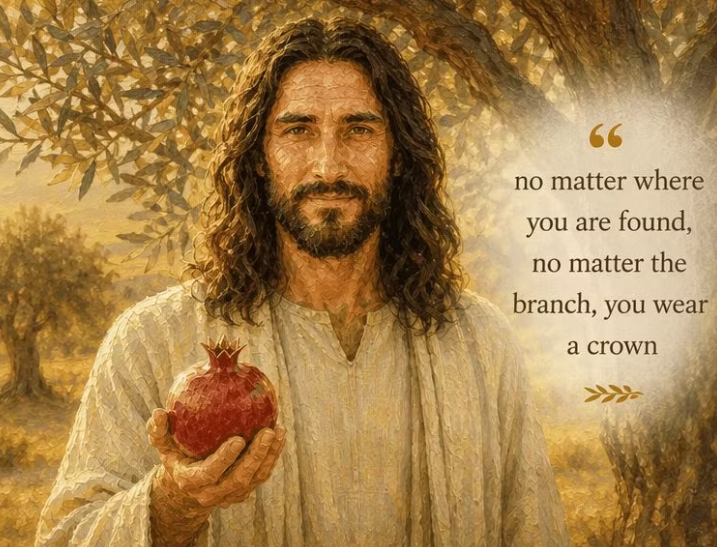


A voice remembered out of the wilderness is heard & felt in kind, a truth of what is needed to always remind, OCO & good tidings of joy & peace refined, keep up the work of mankind & making correct decisions for the betterment of all & consciousness of new conditions & answering the call..
Love, Ron & Nancy
Oceti Sakowan Pine Ridge
Aho youngone
keep at it!!