

Becoming a People of Zion
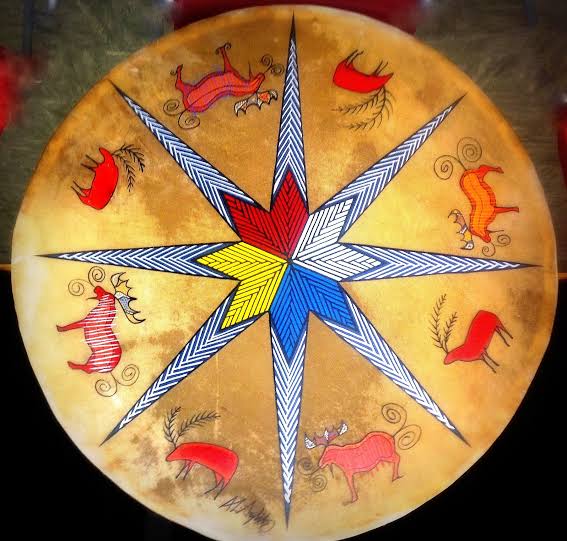

Jordan Dickison is a recognized Chief Assisting Elder on the authorized Council of 7 Assisting Chief Elders of the Anangokaa or the Star People of the Americas. Jordan and his wife Kaylee's responsibilities rest in Communications, Media and Marketing. They work closely with Anangokaa leadership in the Midewiwin, Pembina, Papago and Maya communities.
Jordan Dickison | November 2026
Living in Branson, Missouri, I’ve learned that Christmas doesn’t pay much attention to the calendar. Our Christmas season officially starts November 1, but when I was performing, we’d sometimes start rehearsing Christmas songs in September. We even have Christmas stores open year-round, so I’m pretty sure Santa just lives here. So I figure I have a pretty good excuse to bring up one of my favorite Christmas stories before Thanksgiving.
During World War I, British and German soldiers along parts of the Western Front began singing Christmas carols across enemy lines. Soon, some laid down their weapons, climbed out of their trenches, and crossed into no man’s land to shake hands and exchange gifts with the very men they’d been fighting. They were still wearing opposing uniforms, yet they found something they shared in their celebration of Christmas and, for many, their faith in Christ.
I can’t help wondering whether we, as Book of Mormon believers, have become so concerned with identifying the physical location of Zion, the New Jerusalem, or even the Temple Lot, and with debating which group has the authority or resources to build there, that we’ve neglected the greater work: preparing ourselves to live as a people of one heart and one mind, with no rich or poor among us.
The Book of Mormon gives us a beautiful example of what happens when people genuinely become one in Christ. Following His ministry among the Nephites and Lamanites, Fourth Nephi tells us that the people were:
“all converted unto the Lord” and that “every man did deal justly one with another” (4 Nephi 1:3). They shared what they had until there were no rich or poor among them (verse 4). The record later explains that there was no contention “because of the love of God which did dwell in the hearts of the people” (verse 17).
Eventually, even the names that had divided them disappeared. There were “neither … Lamanites, nor any manner of ites” (verse 20). I find that last detail particularly meaningful. Their unity had grown so deep that the divisions their ancestors had carried for centuries no longer defined who they were.
That part about there being no more “-ites” makes me wonder how many labels we still place between ourselves as Book of Mormon believers. I feel blessed to live in a time when more sacred records from Indigenous peoples are coming forth, offering additional witnesses of Yeshua and His teachings.
In Khipu Intipaq, a vision of the last days describes a remnant “scattered across continents yet united in spirit by the call of remembrance” (Khipu Intipaq 22:55). Mamuwini teaches, “The Father dwells where the humble break bread together, though the roof be low and the walls be thin” (Book Nine, Chapter 3:13). I love the simplicity of that. How much closer to Zion might we become if we started treating one another as family, even when we worship under different names?

So how do we actually become a people who can live this way? In the Book of Jubilees, God promises to change the hearts of His people and create within them “a holy spirit” (Jubilees 1:23). Later, Isaac teaches his sons to love one another “as a man who loveth his own soul” and to seek what benefits his brother (Jubilees 36:4). The First Songab teaches that “Unity did not require the destruction of difference,” describing families who learned to listen to one another and carry their responsibilities together (Plate 26, Side 2). And the Bimosewin Travel Scrolls teach us to “Share bread that is heavy with blessing” and to forgive debts (Chapter 22:39).
I keep coming back to the thought that we should be able to look at another person and sincerely say, “I am you, and you are me.” Your hunger becomes my concern. Your suffering matters to me. And if we began living that way, I wonder how much room would be left for pride, competing titles, or the desire to place ourselves above anyone else.
I believe these sacred records have already shown us how to prepare for Zion. We must allow God to change our hearts and then put that change into practice through the way we love and care for one another. On Christmas in 1914, soldiers wearing opposing uniforms laid down their weapons and found enough in common to share a moment of peace. For that brief time, I believe they experienced a little glimpse of Zion. Our responsibility is much harder. We’re preparing to become a people capable of living together in peace and harmony for 1,000 years under the reign of Christ.
I think we’ve spent enough time debating where Zion will be established, who owns which piece of land, and who has the authority to build there. We can study and argue about those things for another hundred years, but that alone won’t prepare our hearts to receive the Savior. And if we refuse to become a people who can live as one, how can we ever expect to establish Zion?
So let’s not wait. This week, sit down with a fellow Book of Mormon believer from another branch or tradition. Hear their story, respect their beliefs, find a way to serve together, and begin practicing the principles of Zion today.



Comments